|
ETAP Faculty
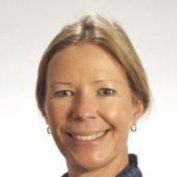
Vicky L. Kouba is a full Professor in the Department
of Educational Theory and Practice at the University
at Albany, State University of New York. She earned
her B.S. in mathematics at Montana State University,
and both her M. S. and Ph.D. in Curriculum and Instruction
(Mathematics Education) at the University of Wisconsin-Madison.
Her research areas include assessment in mathematics,
students' acquisition of mathematical concepts and
beliefs, and integration of mathematics with other
subject areas. Her work has been published in the
Journal for Research in Mathematics Education, the
Journal of Mathematical Behavior, the Mathematics
Teacher, and Teaching Children Mathematics. She
served as an appointed member of the National Council
of Teachers of Mathematics (NCTM) Core Interpretation
Planning and Writing Team for the 1990, 1992, and
1996 National Assessment of Educational Progress
(NAEP), and also served on the 1986 NCTM NAEP interpretation
team. She has taught mathematics and English in
grades 6-12; designed and facilitated numerous workshops
for mathematics teachers; helped to develop mathematics
curriculum in grades K-12; currently teaches and
advises undergraduate, Master's and Doctoral students;
and is a Program Faculty Member for the Ph.D. in
Curriculum and Instruction and the Ph.D. in Instructional
Psychology. Curriculum materials that she developed
received a Teacher Choice Award from Learning Magazine,
and her recent research involves assessing students'
written explanations in mathematics and science.
Field of Specialization
| |
Conceptual Learning |
|
Assessment |
|
Literacy in Mathematics |
Selected
Publications
2000 Kouba, V. L., & Wearne, D. Numbers and
operations: Whole numbers. In E. A. Silver &
P. A. Kenney (Eds.), Results from the seventh assessment
of the National Assessment of Educational Progress.
Reston, VA: National Council of Teachers of Mathematics.
1999 Kouba, V. L. Multiple Interpretations = More
Challenges. Mathematics Teaching in the Middle School,
5 (4), 232-235. (December)
1998 Kouba, V. L., Champagne, A. B., Piscitelli,
M., Havasy, M., White, K., & Hurley, M. Literacy
in the National Standards: Communication and reasoning.
Albany, NY: National Research Center on English
Learning and Achievement.
1997 Kouba, V. L., Zawojewski, J. S., & Strutchens,
M. E. What do students know about number and operations?
In P. A. Kenney & E. A. Silver (Eds.), Results
from the sixth mathematics assessment of the National
Assessment of Educational Progress (pp. 97-140).
Reston, VA: National Council of Teachers of Mathematics.
1995 Kouba, V. L., & Franklin, K. Multiplication
and Division: Sense making and meaning. Teaching
Children Mathematics, 1 (9), 574 - 577. (R)
1994 Kouba, V. L. Self-Evaluation as an act of
teaching. Mathematics Teacher, 87 (5 May), 354 -
358. (R)
Courses Taught
ETAP 720 Doctoral Core Seminar : Instruction
ETAP 750 Doctoral Seminar in Mathematics and Science
Education: Curriculum
ETAP 751 Doctoral Seminar in Mathematics and Science
Education: Instruction
ETAP 850 Doctoral Seminar in Mathematics and Science
Education: Research
ETAP 652M Perspectives in mathematics Education
ETAP 655M Elective in Mathematics Education
ETAP 658M Elective in Mathematics Education
ETAP 690 Field Experience Seminar: Teaching Mathematics
ETAP 519 Learning in the Academic Discipline
Fall
2008 Courses:
ETAP 612, Class #9165 - Teaching Mathematics
in the Elementary School (3 Credits)
This course prepares students to teach elementary
school mathematics. Students will explore what it
means to learn mathematics with understanding while
they deepen their own understandings of fundamental
mathematical ideas, consider how different groups
of students experience mathematics instruction,
and develop pedagogical strategies that emphasize
mathematical reasoning, communication, and problem-solving.
ETAP 638, Class #6294 - Media Literacy
(3 Credits)
Developing an informed and critical understanding
of new communication media, including ways to read
and write electronic texts. Explore implications
of these technologies and their uses in schools,
communities, and workplaces. Focus on practices
involving cutting-edge technologies that hold promise
for the teaching of writing, language and literature.
|
|