


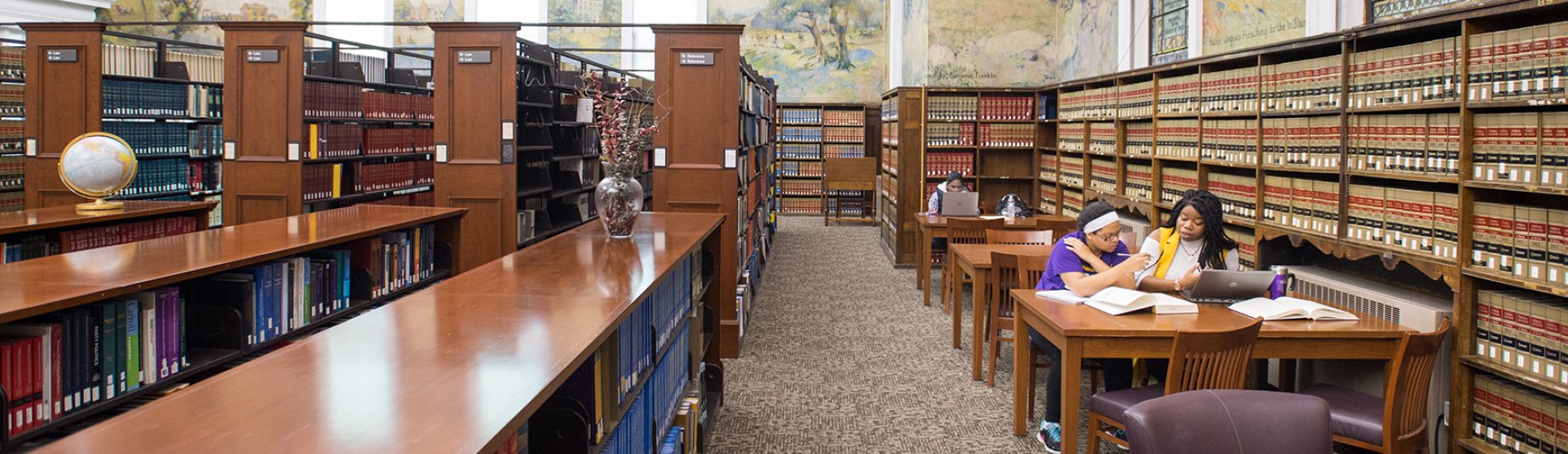
Students studying in the Dewey Library.

Master of Science  in
Information Science School Library
Online or On Campus

About the Program

UAlbany’s ALA accredited Information Science School Library (ISSL) 36-credit fully online program leads to initial teaching certification as a library media specialist or to professional certification if candidates are initially certified. 

As per New York State Education Department’s guidelines ISSL students are eligible to be hired as full-time school librarians with either a 12-credit Supplementary Certificate (for those with teacher certification) or an 18-credit Internship Certificate (for those without teacher certification) as they work toward completing their ISSL Master’s degree. Additionally, all ISSL graduates are immediately eligible for licensure as public librarians upon graduation.

As an approved teacher preparation program with the New York State Education Department, there may be additional certification requirements. These requirements may include, but are not limited to additional workshops. Certification procedures and requirements are outlined on the School of Education’s Pathways into Education Center.


Assessment Data

ALA Logo with the words, American Library Association, ALA Accredited, Committee on Accreditation.

ALA Assessment Data

  • MS Information Science average time to degree for 2024 is 2.22 and first year retention rate is 95.3% This does not include data from dual degree or combined programs.
  • MS Information Science School Library average time to degree for 2024 is 2.79 and first year retention rate is 91.7%.

Library Journal’s Placements and Salaries Survey 2024

Program of Study

Available Courses

  • Teaching Fundamentals for School Libraries
  • Curriculum and Supportive Resources
  • School Libraries: Theory, Practice and Assessment
  • Administration of School Library Media Centers
  • Information Sources and Services
  • Literature for Children
  • Literature for Young Adults
  • The Information Environment
  • Information and Knowledge Organization
  • Research Methods
  • School Library Internship
  • Elective Course


Required Field Experience 

The following courses have a total of 100 hours of aligned field experience:

  • School Libraries: Theory, Practice and Assessment
  • Curriculum and Supportive Resources


Required Internship

There is a University-supervised internship in the program.


program-study

This program is approved for licensure or certification in New York State. 
For more information on Professional Licensure Disclosure, please see the Graduate Bulletin.

Admissions Requirements
Deadlines
Deadlines
  • Fall: August 1
  • Spring: January 1
  • Summer: Rolling
Required Application Materials
  • Transcripts from all schools attended
  • Three letters of recommendation
  • Resume
  • Personal statement
    The personal statement must be a one page single-spaced essay (12 size font) addressing the following: Thinking back on the school librarians you have encountered during your education, how has the role of the school librarian changed? How do you see yourself as part of that change?

Available information for applicants.

Special Note
Special Note

This program requires an internship, field experience, study abroad component, or clinical experience. Students who have previously been convicted of a felony are advised that their prior criminal history may impede their ability to complete the requirements of certain academic programs and/or to meet licensure requirements for certain professions.  If applicants have concerns about this matter, please contact the Dean’s Office of the intended academic program.

admissions
Student Learning Objectives


Learning objectives that UAlbany students are expected to attain through their course of study within their academic program.

Master of Science
Master of Science
  • Explain the basic foundational concepts, models, and theories in the information professions.
  • Discuss the different settings within which information is produced, processed, sought, disseminated, and used.
  • Use the major sources of information and literature pertaining to the information science disciplines.
  • Explain the dynamic nature of the relationships and interactions between information, content, people, and technology within the context of the various information environments.
  • Apply knowledge, skills and attitudes necessary to adapt to the changing nature of information, technology and users.
  • Explain how information professions have changed over time, and how they continue to evolve.
  • Effectively apply the relevant professional standards for information organization and knowledge discovery in a variety of information environments.
  • Apply best practices and standards in the information life cycle stages of creation, acquisition, organization, preservation, access, retrieval, and security in different information environment.
  • Explain cognitive approaches to knowledge organization, retrieval and use by different user groups and in various types of information settings.
  • Respond appropriately to users’ diverse information needs.
  • Develop user education programs.
  • Promote the use of information services and systems.
  • Empower users in a variety of information environments.
  • Formulate policies using organizational and information theory.
  • Interpret policy through the lens of organizational and information theory.
  • Implement policies based on organizational and information theory.
  • Discuss codes of ethics established by professional organizations and how they are applied to information professions.
  • Apply the principles, basic values and ethics, and relevant legal frameworks, such as information access and availability, privacy and confidentiality, intellectual freedom and property rights, to issues in the information professions.
  • Discuss the strengths and weaknesses of a variety of research methodologies used in information science research.
  • Apply appropriate qualitative and quantitative methods and techniques.
  • Produce effective written communication of research, theory and/or applied methodology.
  • Critically evaluate the research design, methodology and results in published information science research literature.
  • Apply management theories, techniques and best practices to manage information issues and information in organizations.
  • Develop leadership qualities required to collaborate with larger communities and the global environment.
  • Participate in leadership roles for the advancement of the profession.
     
slo