AI & Society College

About the College

Founded in Spring 2025 with a $2.4 million investment from the State University of New York (SUNY), the AI & Society College prepares undergraduate and graduate students, faculty and staff for a world shaped by artificial intelligence (AI).  

With a strong emphasis on trustworthiness, equity, privacy and accountability, the College serves as a catalyst integrating AI education across all nine schools and colleges at the University at Albany.

The College ensures that every student — whether they are pursuing a degree in STEM, business, social sciences or the arts — has access to AI-infused learning through cross-disciplinary courses, microcredentials and teaching initiatives.


A UAlbany professor gestures as she speaks to a group of students working in a full classroom.


Physical Space & AI Makerspace

The College will be housed in a multifunctional space in the Lecture Center (LC) 30 and LC 31 designed for collaboration and innovation.  

Features will include individual and group workspaces for fellows, AI-enabled meeting room for hybrid events, a lounge for informal exchange and networking, and GPU workstations in the AI Makerspace.  

The AI Makerspace will be open to all members of the UAlbany community, supporting hands-on exploration of generative, predictive and automated AI.

Stay tuned for news about our Spring 2026 ribbon cutting ceremony!


A UAlbany professor gestures toward a white board, where he's drawn a sketch labeled "Decoder." A seated student is visible in the foreground.


Contact the College

There's a place for everyone in shaping the future of AI and its impact on society.  

  • Campus Community: Faculty, staff and students are invited to co-create innovative teaching, learning experiences, interdisciplinary programs and ways to promote ethical AI use.
  • Partners Beyond Campus: The AI & Society College welcomes partnerships with industry, nonprofits, government and philanthropists to explore how AI can serve society.

Contact us at [email protected] to start a conversation or to invite us to speak to your team/organization.  

Follow the AI & Society College on LinkedIn. 

Opportunities


Call for Faculty Partners

The AI for Public Good initiative is a partnership between the University at Albany, SUNY Oneonta, SUNY Cobleskill and Hudson Valley Community College to strengthen artificial intelligence (AI) teaching and research across the region.

UAlbany’s AI & Society College is leading three projects as part of this initiative and seeking faculty members who are interested in partnering on the work. 
 

About the Projects
About the Projects

As part of this initiative, UAlbany’s AI & Society College is leading three projects:

  • AI Preparedness Academy & Faculty Learning Community: A collaborative initiative designed to build institutional capacity for AI by equipping faculty with the tools and critical frameworks to teach about and with AI, while fostering interdisciplinary dialogue, hands-on learning and exchange of practices. 
  • Visiting & Affiliated Faculty Program: A collaborative effort supporting faculty in co-developing AI-infused microcredentials, courses and instructional materials to expand interdisciplinary learning opportunities for students across institutions. 
  • “AI for Good” Challenge: An annual cross-campus hackathon bringing together interdisciplinary teams of students and faculty to develop AI-powered solutions to real-world community challenges. 
Faculty Opportunities

The AI & Society College is seeking faculty members who are interested in the following opportunities:

  • Co-developing new joint AI-infused courses, programs and initiatives associated with the Visiting & Affiliated Faculty Program
  • Creating teams for an annual hackathon, and mentoring undergraduate and graduate students, associated with the “AI for Good” Challenge

Both projects will begin work in April 2026 and wrap up by the end of June 2026. All participating faculty members will receive a stipend.

Apply to Participate

Interested faculty members must apply to participate by 11:59 p.m. Wednesday, April 1, 2026.  

Applicants must send an expression of interest that includes the following information:

  • A project selection
  • Your motivation for participating in the selected project
  • Any past experiences relevant to the selected project
  • One to two ideas that could contribute to the implementation of the selected project of choice

Please send application materials to Professor Mila Gasco-Hernandez at [email protected]. Contact Dr. Gasco-Hernandez with any questions. 

Fellowship Programs

Through fellowships, faculty and students join the College’s interdisciplinary network dedicated to exploring AI’s societal impact — from ethical frameworks to creative applications.  

The Faculty Innovation Fellowship funds faculty-led initiatives that expand UAlbany’s AI curriculum. Projects may involve student engagement in AI development and application, critical inquiry into AI’s human implications, and creative works that deploy or critique AI. Meet our current faculty fellows.

The Dissertation Fellowship supports PhD research at the intersection of AI and society, including historical and philosophical reflections on AI, artistic practices using AI, and critical analysis of AI’s role in creative and civic life. Meet our current dissertation fellows.

The Master's Experiential Learning Fellowship emphasizes hands-on, practical learning experiences, with fellows supporting the work of the AI & Society College. Meet our current master's fellows.

Applications for 2026-2027 fellowships are now open! Please visit the Opportunities tab above for details.


2025-2026 Faculty Innovation Fellows

faculty-innovation-fellows

Cecilia Bibbò
Cecilia Bibbò
Visiting Assistant Professor
Department of Educational Policy & Leadership, School of Education
Sukwoong Choi
Sukwoong Choi
Assistant Professor, Information Systems and Business Analytics (ISBA)
Massry School of Business
Jared R. Enriquez
Jared R. Enriquez
Assistant Professor
Department of Geography, Planning, and Sustainability
Rey Koslowski
Rey Koslowski
Professor, Director of the Master of International Affairs Program
Department of Political Science, International Affairs, Rockefeller College of Public Affairs and Policy
Luis Felipe Luna-Reyes
Chair of Public Administration and Policy, Professor
Department of Public Administration & Policy, International Affairs, Rockefeller College of Public Affairs and Policy
Sweta Vangaveti
Sweta Vangaveti
Research Scientist, Advanced Computational Facility Manager
The RNA Institute
Jianwei Zhang
Jianwei Zhang
Professor
Department of Educational Theory & Practice, School of Education


2025-2026 Dissertation Fellows

dissertation-fellowship

Rawan Abdelaal

Doctoral Student, Curriculum and Instruction

[email protected] 

Rawan Abdelaal.
About Rawan Abdelaal and her dissertation
About Rawan Abdelaal 

Rawan Abdelaal is a PhD student in curriculum and instruction at the University at Albany. 

She holds a bachelor’s degree in biotechnology from the City College of New York and a master’s degree in curriculum development and instructional technology from UAlbany. 

Her research explores the relationship between artificial intelligence (AI) and computational thinking (CT) at the intersection of science education. 
 

About Rawan Abdelaal's Dissertation

With the rapid advancement of AI and its ubiquitous presence in daily life, she seeks to investigate and develop methods that promote ethical, critical and effective uses of AI in K–12 classrooms, empowering educators and students to engage thoughtfully and responsibly with intelligent technologies. 

Karan Bhasin

Doctoral Student, Economics

[email protected] 

Karan Bhasin.
About Karan Bhasin and his dissertation
About Karan Bhasin

Karan Bhasin is a PhD candidate in Quantitative Economics and Econometrics at the University at Albany, SUNY.

His research lies at the intersection of monetary economics and applied econometrics, with a focus on how economic agents process information and update their expectations — insights that are critical for understanding inflation dynamics, fiscal policy, and macroeconomic stability.

Karan’s work has been featured in The Economist and The Wall Street Journal and has also appeared in leading policy platforms such as the Brookings Institution, VoxEU and Econofact, reflecting its broad relevance to both academic and policy audiences.

He has held research and policy roles at the International Monetary Fund, World Bank, Empire State Development (New York State), and MyGov, Government of India, bringing a global and applied perspective to his academic work. 

Currently, Karan is exploring the use of natural language processing (NLP) techniques to identify and quantify policy shocks, leveraging textual data to uncover latent signals in economic policymaking.
 

About Karan Bhasin's Dissertation

This thesis investigates the behavior of professional forecasters using data from the Blue-Chip Economic Indicators, applying a Bayesian learning framework that incorporates forecaster inattention. We address a central challenge in macroeconomic policy evaluation: identifying unanticipated monetary policy shocks. Unlike the natural sciences, macroeconomics cannot rely on controlled experiments to establish causality. 
To overcome this limitation, we deploy Large Language Models (LLMs) to systematically extract unanticipated shocks from textual data. By conditioning LLMs on specific sources and temporal contexts, we constrain their information set and improve the precision of causal inference. 

This methodology offers a robust tool for policymakers and researchers to evaluate the effects of monetary interventions and to better understand how professional forecasters respond to economic developments. Moreover, we introduce a novel identification strategy for forecaster inattention that utilizes both individual and consensus forecast revisions. 

Our analysis reveals that zero forecast revisions tend to overstate inattention, and that inattention is horizon-specific, driven in part by the regularity of statistical data releases. Persistent forecast disagreement is attributed to heterogeneous interpretations of news, although periods of club-convergence emerge during large economic shocks.

Anastasios Karnazes

Doctoral Student, English

[email protected] 

About Anastasios Karnazes and his dissertation
About Anastasios Karnazes

Anastasios Karnazes is a PhD candidate in English Studies at UAlbany, researching the material transformation from book technologies to artificial intelligence (AI) systems and its effects on aesthetic production. 

He is the author of Rainbow Sonnets 20, published by The Song Cave, and founder of Theaphora, an experimental book and game publisher. His work has been covered in Artforum, ARTnews, Spike Magazine, and Forbes.
 

About Anastasios Karnazes' Dissertation

This dissertation positions artificial intelligence as the exhaustion point of book logic — the moment when Enlightenment systems of knowledge production, replication, and distribution culminate in computational infrastructure and become fully legible as a unified financial, political, and aesthetic project. 

The work traces how information compression functions transformed through the printing press, encyclopedia, digital storage, networked infrastructure, and cloud computing to the memory systems undergirding AI development, arguing that this transformation refracts into dual domains: the collapse of financial systems into speculative bubbles and the aesthetic-cultural reconfigurations that respond to this trajectory. 

Drawing on both historical analysis of dissemination infrastructures and documentation of experimental work in publishing and text editor development, the dissertation demonstrates the prefiguring relationship between literary production mechanisms and computational intelligence systems, positioning AI not as revolutionary break but as the terminal form through which the book's historical trajectory becomes visible.

Iris Aleida Pinzón Arteaga

Doctoral Student, Sociology

[email protected]

About Iris Aleida Pinzón Arteaga and her dissertation
About Iris Aleida Pinzón Arteaga

Iris Aleida Pinzón Arteaga is a PhD candidate in the Department of Sociology at the University at Albany and member of the AI & Society Research Center. Her research examines how young users adopt generative AI technologies for academic and non-academic purposes, with particular attention to patterns of digital inequality.

An interdisciplinary scholar with a background in psychology and social research, she helped co-design the AI for Social Change Lab with Professor Angie Chung, one of the first courses offered in the Department of Sociology to promote critical reflection on the possibilities and limitations of AI technologies. 

Her forthcoming article: ‘It Will Comfort You’: Analysing Undergraduates’ Interactions with AI Chatbots through a Postdigital Feminist Lens in Postdigital Science and Education analyzes students’ interactions with generative AI chatbots from a feminist perspective.

Iris has also conducted prior research on the therapization of society and the post-truth condition, published in journals such as the European Journal of Psychotherapy & Counseling and Awry: Journal of Critical Psychology, as well as a chapter in the edited volume Creative Disruption: Psychosocial Scholarship as Praxis (2025). 

She is also a member of the interdisciplinary research group Violence, Language, and Cultural Studies at the Autonomous University of Bucaramanga (Colombia).

Access Iris Aleida Pinzón Arteaga's ORCID iD.
 

About Iris Aleida Pinzón Arteaga's Dissertation

The dissertation examines how young people engage with generative AI chatbots in educational settings and how these engagements reflect broader digital inequalities.

While public debate around AI in education tends to frame chatbots as either empowering or threatening, this study instead traces how these technologies are enacted in practice, attending to the boundaries young users draw around authorship, authenticity and legitimate learning.

Adopting a sociomaterial genealogical approach, the study unfolds in two phases: a diagnostic phase that maps how young users in the United States and Colombia interact with generative chatbots within their sociotechnical networks, and a problematization phase that explores the institutional, cultural and material conditions shaping these engagements. 

The comparative design highlights how global asymmetries in digital infrastructures, literacies and access to AI tools produce layered forms of inclusion and exclusion. Through interviews, prompt diaries and document analysis, the project seeks to advance a more nuanced understanding of digital inequality in the age of AI.

Spring 2026 Master's Experiential Learning Fellows

masters-fellows

Batzaya (Zaya) Byambasambuu

Master's Student, Public Administration and Policy

[email protected] 

Batzaya (Zaya) Byambasambuu.
About Batzaya (Zaya) Byambasambuu

Batzaya (Zaya) Byambasambuu is a Fulbright Scholar and Master of Public Administration (MPA) student at UAlbany's Rockefeller College of Public Affairs and Policy, concentrating in information technology management. Her interests focus on the intersection of technology, governance and public policy, particularly how digital systems shape public institutions and child protection.
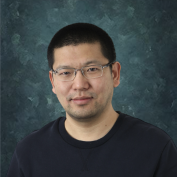
Before starting her graduate studies, Zaya worked on national initiatives tackling human trafficking and child protection in Mongolia. At The Asia Foundation, she contributed to a U.S. Department of State-funded Child Protection Compact project aimed at strengthening the investigation and prosecution of child trafficking cases and enhancing victim-centered responses within the justice system. She also co-founded the Anti-bullying Initiative Mongolia, leading programs focused on cyberbullying prevention and public awareness campaigns.
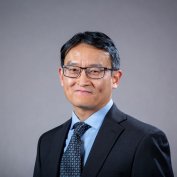
As a Master’s Experiential Learning Fellow, Zaya is developing an AI Curriculum Navigator for UAlbany.

Kathleen Boyle

Master's Student, Curriculum Development and Instructional Technology

[email protected]

Kathleen Boyle.
About Kathleen Boyle

Kathleen Boyle is a marketing strategist, educator, and learning and development specialist with more than 20 years of experience in the marketing communications industry and over 15 years in higher education. 

She has held leadership and strategy roles at global agencies including OgilvyOne Worldwide and Wunderman Cato Johnson, working with major clients such as IBM, DuPont, DHL, and SAP. In academia, she has developed innovative marketing and communications curricula, created new academic programs, and coached award-winning student teams in national competitions. 

Kathleen specializes in building capability development programs that strengthen strategic thinking, creativity and data-driven decision making, and she currently focuses on helping organizations integrate artificial intelligence responsibly into marketing and learning environments.

As a Master’s Experiential Learning Fellow, Kathy is working on a handbook about AI for teaching that will support UAlbany faculty members using AI in the classroom.

Ayotokunbo Egbontan

Master's Student, Environmental Health Science

[email protected] 

Ayotokunbo Egbontan.
About Ayotokunbo Egbontan

Ayotokunbo Egbontan is a master's student in UAlbany's Environmental Health Science program. 

His research focuses on the comparative environmental and economic performance of conventional solar photovoltaic systems and integrated agrivoltaics systems — using AI to model environmental impacts more precisely by learning from large datasets.

This research work provides insight into the life cycle assessment (LCA) of the agrivoltaics concept by quantifying its environmental impacts relative to conventional practices, including separate lettuce cultivation combined with photovoltaic electricity generation and separate lettuce farming paired with conventional electricity production.

As a Master’s Experiential Learning Fellow, Ayo has been reviewing the literature on the use of AI in teaching and learning processes in higher education.

Prakash R. Kota

Master's Student, Business Administration

[email protected] 

Prakash R. Kota.
About Prakash R. Kota

Prakash R. Kota is a student in the Part-Time Weekend Master of Business Administration (MBA) for Executives program and an adjunct instructor teaching AECO 466W: Financial Economics at UAlbany's Massry School of Business. 

He is also the founder of MLPowersAI, Inc., an early-stage venture focused on building machine learning models, agentic AI systems and scalable AI architectures for real-world decision support across industry and society.

Prakash holds a PhD in Chemical Engineering and has a background in computational modeling and engineering systems. He brings a multidisciplinary and practitioner-oriented perspective to artificial intelligence, focusing on building data-driven systems that translate historical data into predictive and decision-support tools using neural networks and modern machine learning techniques. 

His projects span areas such as financial forecasting, semiconductor process optimization complex process engineering systems, healthcare diagnostics, Li-ion battery performance and environmental markets.

Prakash is particularly interested in the intersection of AI, pedagogy and real-world deployment. As both a student and an instructor, he works to bridge the gap between rapidly advancing AI technologies and how students and educators engage with them responsibly and effectively.

As a Master’s Experiential Learning Fellow, Prakash is developing an AI agent that could be used in the classroom.

Jayanth Reddy Lethakula

Master's Student, Data Science

[email protected] 

Jayanth Reddy Lethakula.
About Jayanth Reddy Lethakula

Jayanth Reddy Lethakula is a master’s student in Data Science at UAlbany. His interests include artificial intelligence, machine learning and data-driven systems for solving real-world problems.

As a Master’s Experiential Learning Fellow, Jayanth is configuring and maintaining AI workstations at the AI Makerspace, supporting AI-related activities and events, and developing an AI-guided Project Development System designed to help students transform project ideas into feasible implementations using Makerspace tools and resources. 

Robert Manning

Master's Student, Philosophy

[email protected] 

Robert Manning.
About Robert Manning

Robert Manning is a graduate student in philosophy at UAlbany currently researching privacy as it relates to brain-implant technology, Large Language Model (LLM) technology and AI. 

As a Master’s Experiential Learning Fellow, Robert has been working with dissertation fellows, faculty innovation fellows and College leadership to boost the visibility of the AI & Society College.

Kalonji Samuel

Master's Student, Information Science

[email protected] 

Kalonji Samuel.
About Kalonji Samuel

Kalonji Samuel is completing UAlbany's MS in Information Science program, with a concentration in Artificial Intelligence and Data Analytics.

As a former U.S. Army Officer, U.S. Diplomat and Senior Federal Controller, Kalonji brings over 20 years of leadership experience managing billion-dollar global portfolios and leading financial governance across high-stakes, regulated environments.Kalonji is a graduate of the Microsoft Software & Systems Academy (MSSA) and specializes in the intersection of cloud governance, risk transformation, and responsible AI adoption. 

As a Master’s Experiential Learning Fellow, Kalonji is developing an AI-integrated syllabus generator that is designed to help faculty align curricula with University-wide AI policies while maintaining pedagogical flexibility. Through this work, he aims to translate complex governance frameworks into practical tools that advance public-sector innovation and algorithmic accountability.

Gayathri Gupta Samudrala

Master's Student, Educational Psychology and Methodology 

[email protected] 

Gayathri Gupta Samudrala.
About Gayathri Gupta Samudrala

Gayathri is a master’s student in the Educational Psychology and Methodology program at UAlbany. 

She has a bachelor's degree in psychology, economics, and public administration from Hyderabad, India. Her research interests include developmental psychology and the intersection of AI, technology and human development. Currently, she is exploring the relation between communication/language interventions and children’s behavior problems.

As a Master’s Experiential Learning Fellow, Gayathri is interviewing faculty to understand their use of AI in the classroom environment and how the AI & Society College can help address their needs.

Curriculum


Two students sit inside a full classroom and work together to build an electronic device during an AI-focused class.


Current Offerings

More AI courses, microcredentials and degrees programs for all disciplines are coming soon! Check back for updates.
 

Undergraduate Courses

The College encourages undergraduate students interested in artificial intelligence to explore the following courses:

Visit the Schedule of Classes to explore upcoming course offerings.

Microcredentials
Microcredentials

Microcredentials are a collection of courses and certificates that help learners build in-demand skills and competencies.

Visit the Professional and Continuing Education (PaCE) website to learn more about microcredentials. 

Google AI Certificates

Google and SUNY have partnered to give SUNY students, faculty and staff free access to Google AI learning opportunities.  

Visit the Free Google AI Certificates at SUNY webpage for more information.


Dr. M. Abdullah Canbaz gestures as he teaches a classroom full of students. The screen behind him shows the course name, CINF 135: Concepts of Artificial Intelligence.


Teaching & Learning Resources 

University Libraries’ Generative AI and Academic Integrity Guide: Learn about the relationship between generative AI and academic integrity, and access other AI resources from the University Libraries.

CATLOE’s Guides for Supporting Students' Learning in the Age of AI: The Center for the Advancement of Teaching, Learning, and Online Education (CATLOE) offers guidance for all instructors, regardless of AI experience level.

Events

Join us for public panels, workshops and conversations throughout the year. Explore all AI Plus Events.


A woman stands among a seated crowd at a UAlbany AI Plus event and speaks into a microphone to ask a question.

2025-2026 Leadership

Acting Director

Hany Elgala
Hany Elgala
Acting Director, AI & Society College, Associate Professor
College of Nanotechnology, Science, and Engineering; Department of Electrical & Computer Engineering

Acting Associate Director

Mila Gascó-Hernandez
Associate Professor & Research Director for the Center for Technology in Government
Department of Public Administration & Policy; International Affairs; Rockefeller College of Public Affairs and Policy

Advisory Board

The College's advisory board includes faculty and student representatives.


Faculty Representatives 


Marcie Newton
Marcie Newton
Assistant Director & Lecturer II
Writing & Critical Inquiry Program
Rita Biswas
Rita Biswas
Ackner-Newman Endowed Professor and Associate Professor, Finance
Massry School of Business
Alessandra Buccella
Alessandra Buccella
Assistant Professor
Department of Philosophy
M. Abdullah Canbaz
M. Abdullah Canbaz
Assistant Professor, Information Sciences and Technology Department
College of Emergency Preparedness, Homeland Security and Cybersecurity, Department of Information Sciences and Technology
Ming-Ching Chang
Ming-Ching Chang
Associate Professor
College of Nanotechnology, Science, and Engineering, Department of Computer Science, Department of Electrical & Computer Engineering
Daniel Goodwin
Daniel Goodwin
Professor of Studio Art, Photography and Related Media Area Head, and Department Chair
Department of Art & Art History
Cecilia Levy
Cecilia Levy
Associate Professor
Department of Physics
Mary Valentis
Mary Valentis
Visiting Associate Professor; CHATS Founder & Director
Department of English
Xin Wang
Xin Wang
Assistant Professor
Department of Epidemiology & Biostatistics, College of Integrated Health Sciences
Jianwei Zhang
Jianwei Zhang
Professor
Department of Educational Theory & Practice, School of Education


Student Representatives 


Alana Borrero

Undergraduate Student
[email protected] 

Alana Borrero.

Shannon Sutorius 

Graduate Student
[email protected] 

Shannon Sutorius.